3281 E. Guasti Rd, STE 700, Ontario, CA 91761
1712 9th Ave SW, Watertown, SD 57201
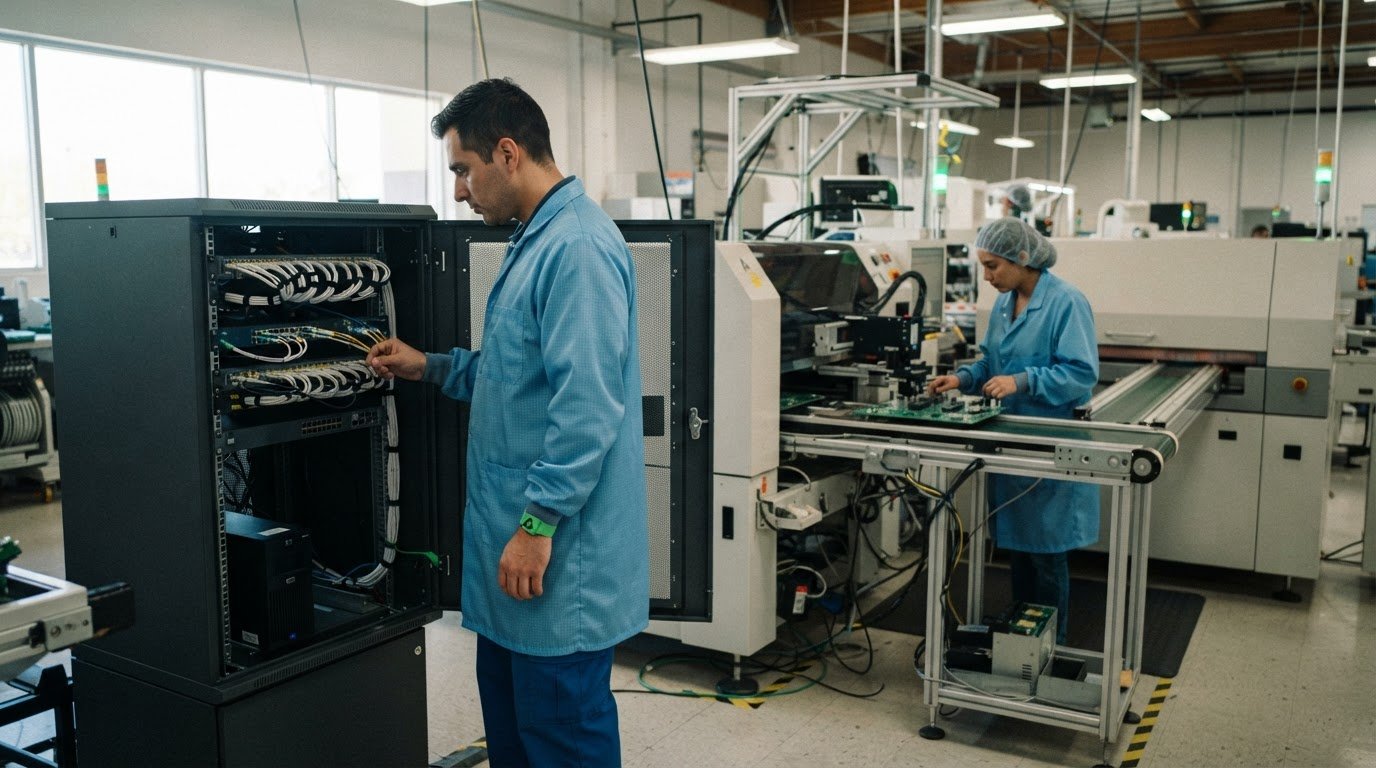
A signed policy won’t keep a production environment compliant on its own. IT support that understands manufacturing compliance turns security requirements into daily work, including cybersecurity, network oversight, backups, patching, and IT planning that account for production needs. For manufacturers handling Controlled Unclassified Information, NIST SP 800-171 is a relevant security framework, according to the National Institute of Standards and Technology.
Keeping production moving while protecting sensitive information is a practical concern, not a box-ticking exercise. CMMC Level 2 requirements are relevant to customers handling controlled unclassified information. This article explains how managed IT can support NIST or CMMC efforts, what manufacturing-focused support involves, and what to consider when assessing whether a support model fits your operations.
• See how managed IT can connect cybersecurity, backups, and system oversight to manufacturing compliance work.
• Learn which support practices help teams spot technology issues before they interrupt production.
• Identify the IT services that can support compliance needs while keeping operational demands in view.
• Find out when managed or co-managed support may help your team strengthen its IT and security practices.
Managed services connect security controls with the systems, people, and records that keep production running. For manufacturers handling Controlled Unclassified Information, NIST SP 800-171 is a relevant security framework, according to the National Institute of Standards and Technology. CMMC Level 2 requirements also apply to customers handling controlled unclassified information. The work starts by mapping systems and access to the applicable requirements.
What are the risks of using IT support that lacks manufacturing compliance expertise? Gaps between office IT and operational technology can leave equipment, production data, and intellectual property exposed. Weak monitoring or a slow response can give ransomware more time to disrupt operations and compromise sensitive files. Your support team needs to account for the different roles and risks of business networks, industrial networks, and connected equipment.
For manufacturers in the defense industrial base, DFARS clause 252.204-7012 is a relevant cybersecurity requirement, according to the Electronic Code of Federal Regulations. ISO 27001 is a security framework, according to the International Organization for Standardization. These frameworks and requirements are not interchangeable. Managed IT services can help organize security work around the requirements that apply, while keeping records of actions, access, and system changes.
A practical program combines proactive threat detection with regular security reviews and compliance checks. Teams can review account permissions, patch status, backup health, and alerts across IT and operational technology systems. Industrial equipment may use older software or connections that were not designed for modern security controls. Network segmentation and monitoring for unusual traffic can help limit exposure without treating production equipment like an ordinary office workstation.
Ransomware can threaten both sensitive intellectual property and production continuity. A response plan should define who investigates alerts, isolates affected systems, and restores data from backups. These steps need to account for equipment dependencies and production priorities. Manufacturing-focused IT services for manufacturing connect cybersecurity oversight with the realities of plant operations.
Manufacturing IT support connects monitoring, equipment dependencies, and recovery planning to production priorities. It needs to account for plant systems, not just office devices.
Production downtime can start beyond the machine: a failed network link, unavailable platform, or delayed data exchange. Support teams map these dependencies to trace how an IT fault affects equipment and output. Monitoring network traffic, equipment performance, and anomaly alerts helps teams spot trouble sooner. Escalation paths and recovery priorities should reflect which systems production relies on.
Manufacturing-focused support pays close attention to operational technology, production schedules, and equipment dependencies. The distinction is practical: a change to a network or platform can affect a production line, sensor, or data flow. Support should consider these production impacts, not just office networks and user devices. Compare monitoring plans, maintenance coordination, system coverage, and response paths for incidents that could affect production. A capable partner can explain how the support team coordinates with plant staff during an outage.
For business continuity, support can combine network monitoring, equipment performance tracking, and predictive maintenance planning. Manufacturing companies can map system dependencies and recovery priorities before an interruption, then use those plans to guide the response. Cloud platforms may support access to business systems, while production equipment still needs careful attention to its connections and operational role.
If you’re assessing production risks, discuss your manufacturing IT support needs and the systems your operation depends on.
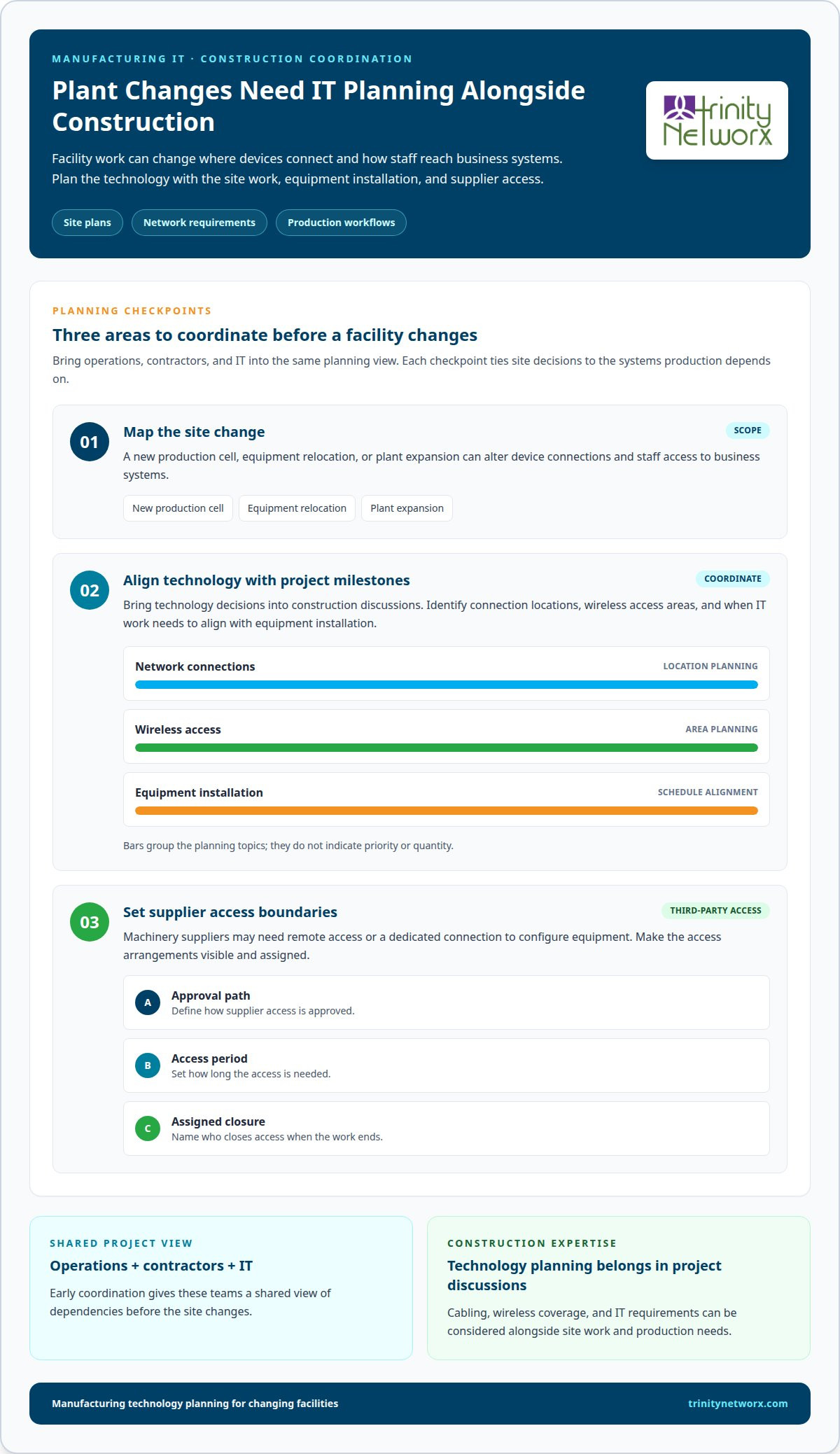
Compliance planning also needs to account for physical changes to a manufacturing site. A new production cell, equipment relocation, or plant expansion can change where devices connect and how staff access business systems. Trinity Networx’s construction expertise brings technology planning into project discussions, so cabling, wireless coverage, and IT requirements are considered alongside site work.
During a facility project, teams can coordinate technology decisions with construction milestones. For example, the plan can identify where network connections are needed, which areas require wireless access, and when technology work must align with equipment installation. Early coordination gives operations, contractors, and IT a shared view of dependencies before the site changes.
Vendor involvement deserves its own planning track. A machinery supplier may need remote access or a dedicated connection to configure equipment. Set an approval path, define the access period, and assign someone to close access when the work ends. For manufacturers with multiple suppliers, a consistent process helps keep third-party activity visible without treating every vendor request as an exception.
Trinity Networx’s construction expertise can also inform technology planning when a plant adds space or changes workflows. Site plans, installation schedules, and network requirements need to support the intended operation. GDPR is one compliance framework established by the European Union; other obligations depend on your business activities and the data you handle.
Discuss a compliance support plan for your production systems and the controls your operations need.
Trinity Networx helps manufacturers connect CMMC compliance work with the IT systems that support daily production. Turn to the team when your security controls, backup practices, or internal IT capacity need closer alignment with compliance goals.
Managed IT Services and Cybersecurity Solutions support day-to-day technology and security needs. Data Backup & Recovery supports continuity planning, while Co-Managed IT lets Trinity Networx work alongside your existing IT staff. The right mix depends on your systems, compliance priorities, and in-house capabilities.
CMMC Compliance support is relevant when your organization handles controlled information or is preparing for customer requirements tied to defense work. Discuss the systems in scope, current security processes, and where your team needs support. Contact Trinity Networx to discuss your manufacturing IT and compliance needs.
Your next step is to turn compliance goals into an operating plan your production team can use. Start with the systems that handle controlled information, the plant connections that support output, and the security gaps that need clear ownership. Then align responsibilities across IT, operations, and leadership. IT support that understands manufacturing compliance should make priorities visible, translate them into practical work, and account for production demands as that work is planned.
Trinity Networx can help shape a support approach around your manufacturing environment, whether your team needs managed coverage or added support alongside internal IT. Bring your current concerns, business priorities, and compliance objectives into the discussion. Contact Trinity Networx to discuss your manufacturing IT needs. A clear plan gives your team a practical place to begin and the confidence to move forward.
Manufacturing IT support covers the business technology and connections that keep information moving across a plant. That can include user accounts, business applications, network access, cloud platforms, and data recovery planning. For example, a production team may need timely access to work instructions while engineering files remain restricted. Support should reflect the systems, equipment links, and data your operation depends on.
IT support keeps business systems usable, secure, and connected to operational needs. It can coordinate technology changes with production schedules, help staff resolve access or device issues, and plan recovery when systems fail. For example, if a quality team cannot retrieve inspection records, support can trace the issue across accounts, applications, and network connections instead of treating each as a separate problem.
Providers should understand the standards and regulations relevant to your contracts, products, information, and customers. NIST SP 800-171 is relevant to manufacturers handling Controlled Unclassified Information, according to the National Institute of Standards and Technology. ISO 27001 is a security framework, according to the International Organization for Standardization. CMMC, FDA requirements, and ITAR may also merit review in context; applicability depends on the organization’s work and obligations.
IT support can help translate CMMC and NIST SP 800-171 objectives into assigned technical work. For example, it can map which users access controlled files, record system changes, and track security issues through resolution. A manufacturer can also coordinate internal owners, IT staff, and relevant vendors so that policies, technical controls, and supporting records describe the same operating environment.
Look for relevant experience with manufacturing systems, controlled data, and production-sensitive changes. Ask how the provider handles plant network dependencies, audit evidence, and incident coordination. Any credentials should match the work and your organization’s requirements, but they do not replace practical knowledge. For manufacturers in California, Nevada, Arizona, and Utah, clear communication with operations staff matters too.

Article by
Lance Reichenberger, Ph.D.., J.D. (Candidate)
Dr. Lance Reichenberger is the founder of Trinity Networx, a Southern California technology firm specializing in managed IT services, cybersecurity, network infrastructure, and business technology strategy. With nearly four decades of experience in the IT industry, he works with businesses to improve operational efficiency, strengthen security, and align technology with long-term growth objectives.
Lance focuses on proactive IT management, enterprise wireless infrastructure, cybersecurity integration, and scalable technology solutions for growing organizations throughout Southern California.
The content published on this website is provided for general informational and educational purposes only. Articles may be created, edited, or enhanced with the assistance of artificial intelligence and automation tools under the direction and review of Trinity Networx. While every effort is made to ensure accuracy and relevance, the information provided should not be considered professional, legal, financial, cybersecurity, or technical advice specific to your organization. Businesses should consult directly with a qualified professional regarding their unique environment, compliance requirements, and operational needs. Trinity Networx makes no warranties regarding completeness, reliability, or applicability of the information contained within these articles.
Schedule a brief conversation with Trinity Networx to discuss your business technology needs.
Get a practical roadmap built around your business, your users, your systems, and the technology issues that need attention first.
Put the right technology, support, security, and infrastructure in place so your business can grow, adapt, and move forward with confidence.